
Photographing the Past in Brevard
Finding a Twenty-Dollar Lens at the Shop of St. Philips
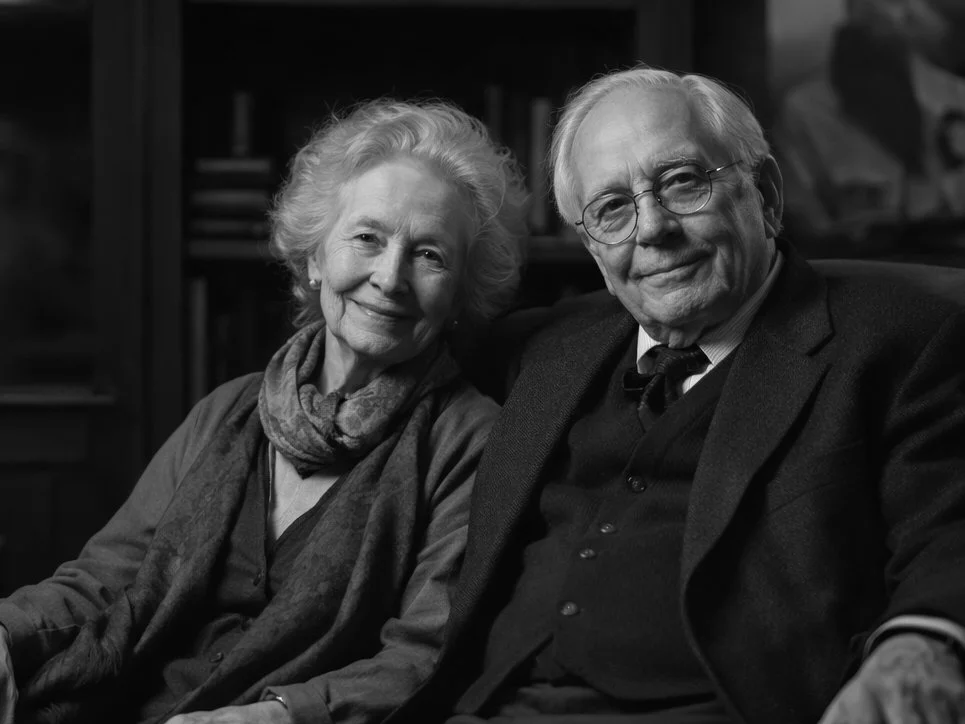
“But the image on the screen was not Mary and Bob.
It was an older couple, both with whitish-gray hair.
I couldn’t believe my eyes. There wasn’t a couple at the gathering who even remotely resembled them, and I had taken only one photograph of anyone sitting on that loveseat.”
It was mid-October, and the town of Brevard was bustling with traffic. In western North Carolina, the trees usually reach their peak colors around that time, and consequently the streets and sidewalks fill with cars and people, leaf-lookers as they are commonly called. Despite the heavy traffic, I managed to get into the left-hand lane and turn into the parking lot of my favorite thrift store. I had been stopping on Caldwell Street at the Shop of St. Philips for the past few months, usually on a weekly basis. I had become drawn to it like a moth to a flame, as had many other people. The parking lot was almost always full when the store was open.
The store itself is always neat and clean, and all their treasures are carefully and thoughtfully displayed. I usually look for shirts and then check the glass display cases, along with the section that holds miscellaneous tools and gadgets. That day, I immediately found a nice green long-sleeve shirt and gracefully folded it over my left arm. As I peered into the glass case, I noticed a long camera lens. It immediately caught my eye, and I asked to look at it. The lady behind the case handed it to me with a smile.
The lens was old, very old. It fit a Nikon camera, but I couldn’t see the type of mount written anywhere on it. I had bought a used Nikon D750 in 2024 and, in 2025, had found a brand-new Nikon D850 on sale, so naturally I bought that one as well. It’s true that I am afflicted with what’s called gear acquisition syndrome, commonly known as GAS by photographers. The price of the lens was just twenty dollars, but without knowing if it would fit my cameras, I decided not to buy it.
That night, the thought of the lens weighed heavily on my mind. The worst-case scenario was simple enough. I would buy it, it wouldn’t fit, and I would donate it back to the Shop of St. Philips, which would be perfectly fine with me. I grabbed my iPad and searched for old lens mounts for Nikon cameras. It seemed that F-mount lenses were among the most common older mounts, and that happened to be exactly the type of mount my Nikon cameras used. The next afternoon, I stopped by the store again. The lens was still there, so I bought it. When I got it home, I discovered within two minutes that it not only fit, but it was a brilliant piece of glass.
A few weeks went by, and I became consumed with daily chores, photographing real estate listings, and prepping my house for winter. In late November, I landed a gig to photograph a family reunion in an old, but very large, building. On the designated Saturday evening, I arrived at what appeared to be a very old, remodeled wooden barn. It was 6:15, and several guests had already arrived, even though the event didn’t start until seven.
The floors were refinished, two-inch-wide pine boards, and the walls were made of old, unfinished one-by-six pine planks. Most of the ceilings were open to the decking above and hanging elegantly throughout all the rooms were very old, but beautifully refurbished, bare-bulb light fixtures.
I had been hired by a very nice man who goes by the nickname of Rolls. Now, I don’t know if he got that nickname because he has rolls of money, because he rolls old drunks for their cash, or because of the very expensive and highly polished Rolls-Royce that sits on display in another building on the property. I’m thinking it’s the latter, but I didn’t ask.
With a cigar in his hand, he guided me over to the refreshment bar and instructed the bartender, Kenneth, to serve me whatever drinks I wanted all night long. I politely chose a Diet Pepsi and stuck with that drink for the entire evening. As the night wore on and I photographed more and more people, I began to wonder if that Pepsi might have contained alcohol. I started experiencing some strange things with my new, old lens, the one I had brought along mostly just for fun.
Around nine p.m., I had taken close to one hundred photos, which for me was a lot. I learned photography on film cameras, and on most of my early gigs I usually carried only two rolls of twenty-four exposure professional film. For weddings, I might have stretched that to three rolls. That was it. Tonight, I had my Nikon D750 with me, so I had virtually unlimited shots available, which for old-time shooters like me can sometimes feel like a curse rather than a blessing.
It was around 9:30 when Mary and Bob asked me to photograph them sitting on an old, well-worn, dark gray fabric loveseat in a beautifully decorated wood-paneled study. Hanging on the wall behind them was a very old painting of George Washington, positioned just over Bob’s left shoulder. From where I stood, Mary was on the left and Bob on the right. They tilted their heads slightly toward each other. Mary had beautiful dark brunette hair, and Bob’s hair was a rich, deep black. His dark navy blazer was open, revealing a matching vest underneath. Mary wore a shawl loosely wrapped around her neck.
They were both in their late thirties and wanted a photograph they could print and send to their parents. Because I was using the 200mm lens, I backed up a fair distance and snapped a perfectly exposed, perfectly composed image. I handed the camera to them so they could review it on the LCD display. They smiled, thanked me, and headed back to the party to rejoin the other guests.
About ten minutes later, I returned to the bar, grabbed a few cheese and cracker snacks, and Kenneth poured me another Diet Pepsi. I took a seat at the end of the bar and pressed the review button on my camera. The last photo I had taken was the one of Mary and Bob on the loveseat.
But the image on the screen was not Mary and Bob.
It was an older couple, both with whitish-gray hair.
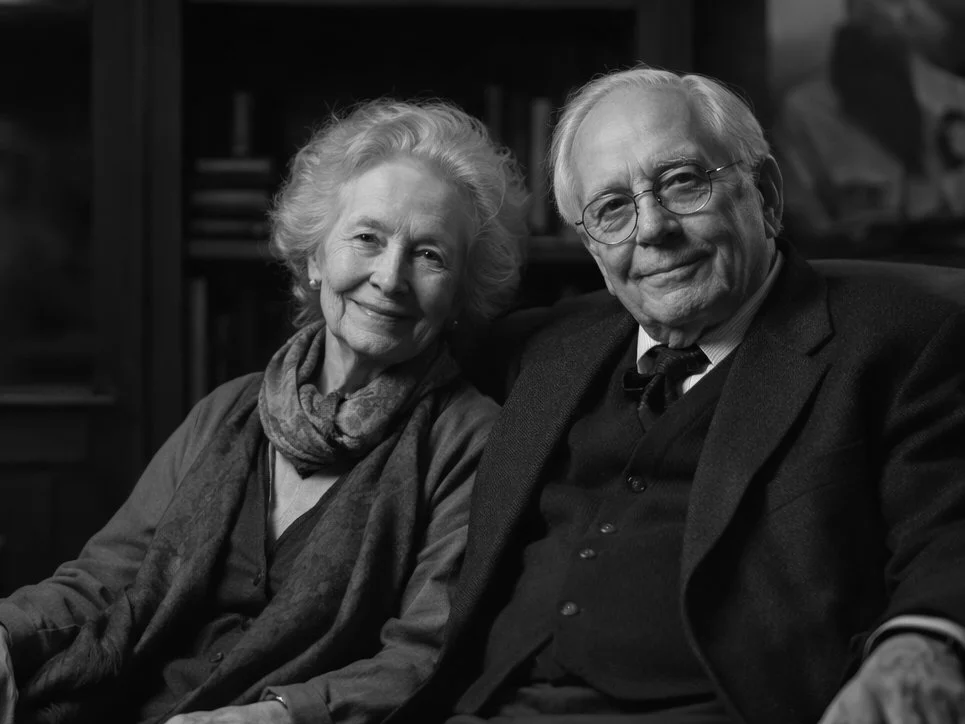
I couldn’t believe my eyes. There wasn’t a couple at the gathering who even remotely resembled them, and I had taken only one photograph of anyone sitting on that loveseat. I called Kenneth back over and asked him to look at the screen and tell me what he saw. He studied it for a moment and said he saw a man and woman with gray hair sitting on a loveseat. He added that the image was in black and white.
He looked at me strangely and asked if I had brought some liquor with me. I assured him I had not. He seemed puzzled that I, the photographer, was asking him to describe an image I had just taken. Even though I was unsettled and confused, I picked up my camera and rejoined the gathering.

At around 10:15, I aimed the camera toward the bar, got an approving nod from Kenneth, and snapped a strikingly good image of him offering me a drink. At first, the photo looked great. Then, slowly, it began to change right in front of my eyes. The image shifted into a very old, rustic bar made of unfinished pine. The shelves behind it were rough, and standing there was an older man who appeared to be around seventy years old. He smiled at me warmly, holding a bottle in his left hand and an empty glass in his right. It was clear that the photograph showed an older bartender offering me a shot of whiskey, just as Kenneth had done moments earlier.
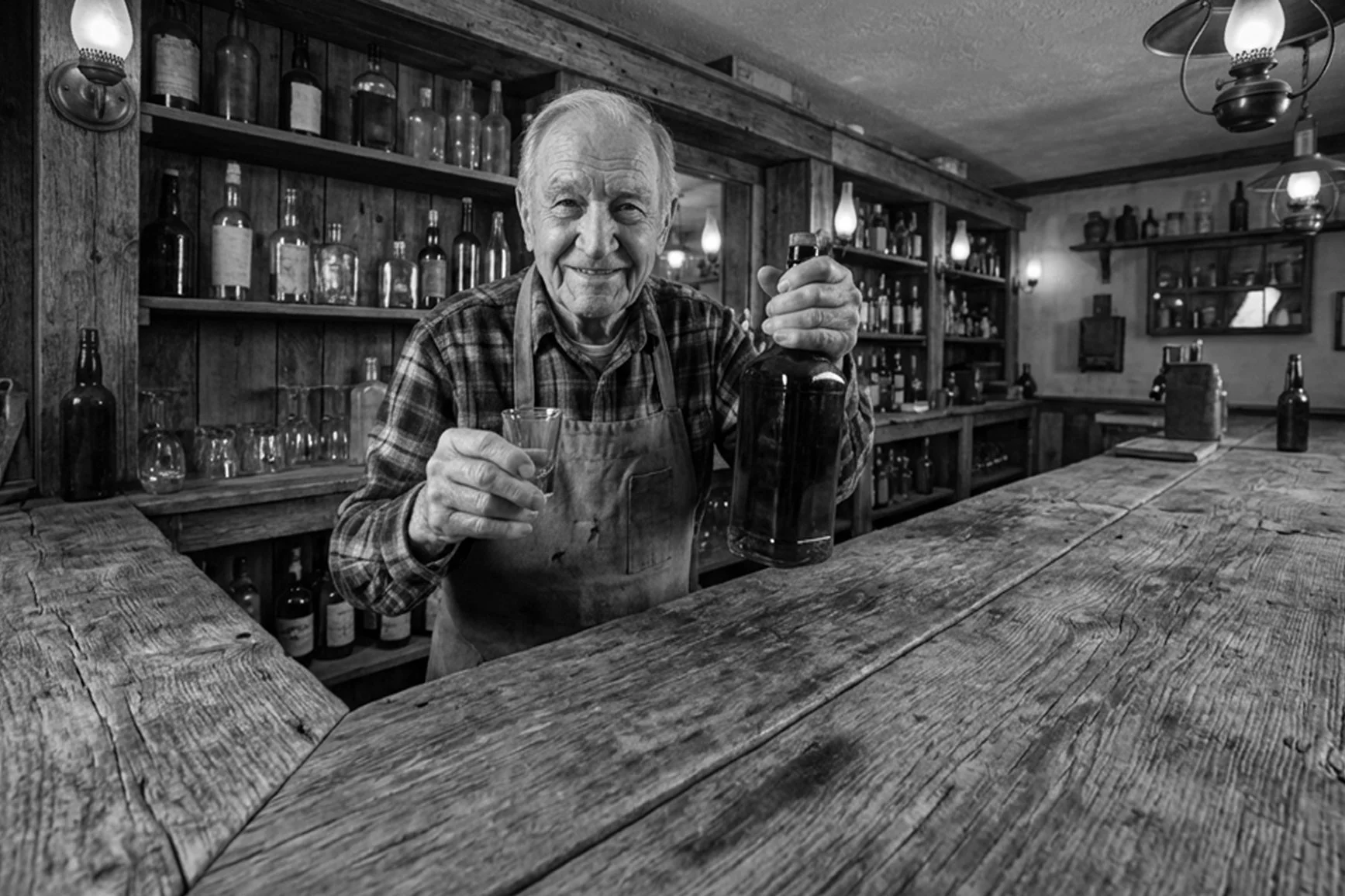
Kenneth noticed me staring at the back of my camera and gave me a sideways nod, as if asking whether everything was all right. I smiled, nodded back, and turned away.
I reached for the lens and pressed the release button. It was time to take it off and put on a newer lens. I still had a job to do and guests to photograph at this family reunion. However, with a slight twist, I realized the lens was not coming off. I tried again. Nothing. I had only brought one camera body, so I was stuck with that lens whether I liked it or not. I told myself the image differences were just a glitch and continued working.
I was wrong, so very wrong.
Around 10:30, I noticed something undeniable. The photographs began to change within minutes of being taken. The lens was not bound to the present. Each time I pressed the shutter, it quietly recorded two moments, one from the present and one from the past.
I had no control over how far back in time the second image reached, but that no longer mattered. In a way, I was holding a crystal ball. I could see into the past, even if only for a single moment.
At midnight, Rolls stopped by to thank me for my work. He handed me a check and gave me his card so I could send him the edited photos. It had been a night to remember, both for experiencing a joyful family reunion and for photographing history itself.
Two weeks later, I had finished editing the images and sent them to Rolls. He was thrilled with the results. I asked if I could also send him a few prints of some older people to see whether he recognized them. Without hesitation, he said yes, so I selected a few prints to mail.
The first print I chose was the older couple sitting on the loveseat. The second was the elderly bartender behind the bar. After that, I included two family photographs showing a husband and wife with their children. I thought it might be interesting to see if any of them meant something to him.
I was not prepared for his response.
A week later, Rolls called me, sounding both excited and completely confused. He told me the old couple on the loveseat was his grandparents, who had passed away sometime in the 1960s. The old bartender was his uncle, who had passed around 1970. The first family photo was his uncle’s family, and the second was a picture of him, his sister, and his parents.
He asked me where I got the photographs.
“Rolls,” I said, “I bought a magic lens that lets me photograph the past.”
He chuckled softly and replied, “Well, thanks for sending them, regardless of how you got them.”
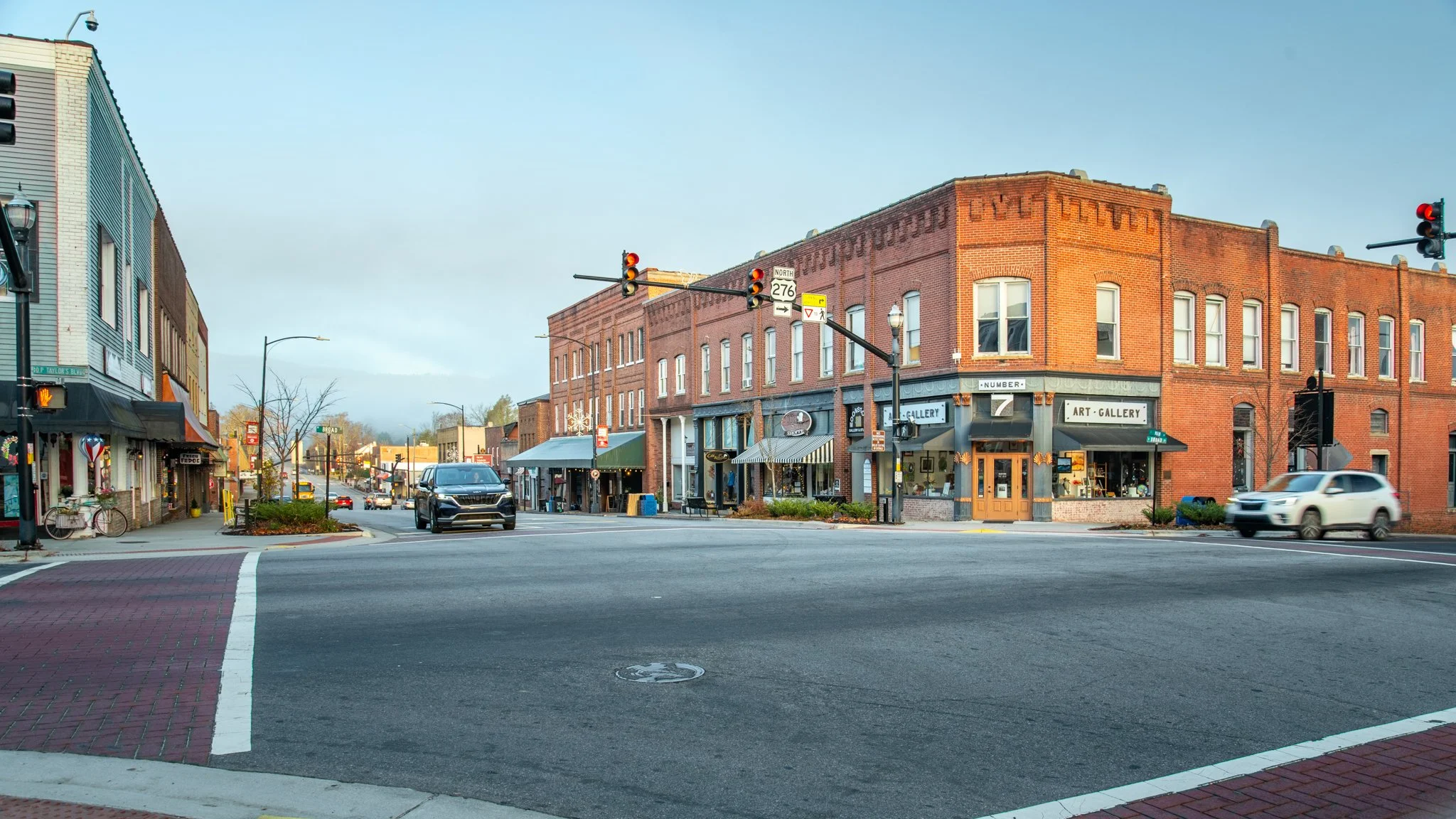
A few weeks went by, and Christmas had come and gone. January rolled in, and I finally found some quiet time to take more photos. Naturally, I chose to explore my magic, time-traveling lens. I wandered through downtown Brevard and snapped away at the town’s old brick buildings and busy streets. With each image came another glimpse of the past. I was still puzzled by it all, but as the days passed and with each press of the shutter button, I began to feel a growing sense of inner stress. I had the ability to see the past. I couldn’t help but wonder how that might affect me, or even the future.
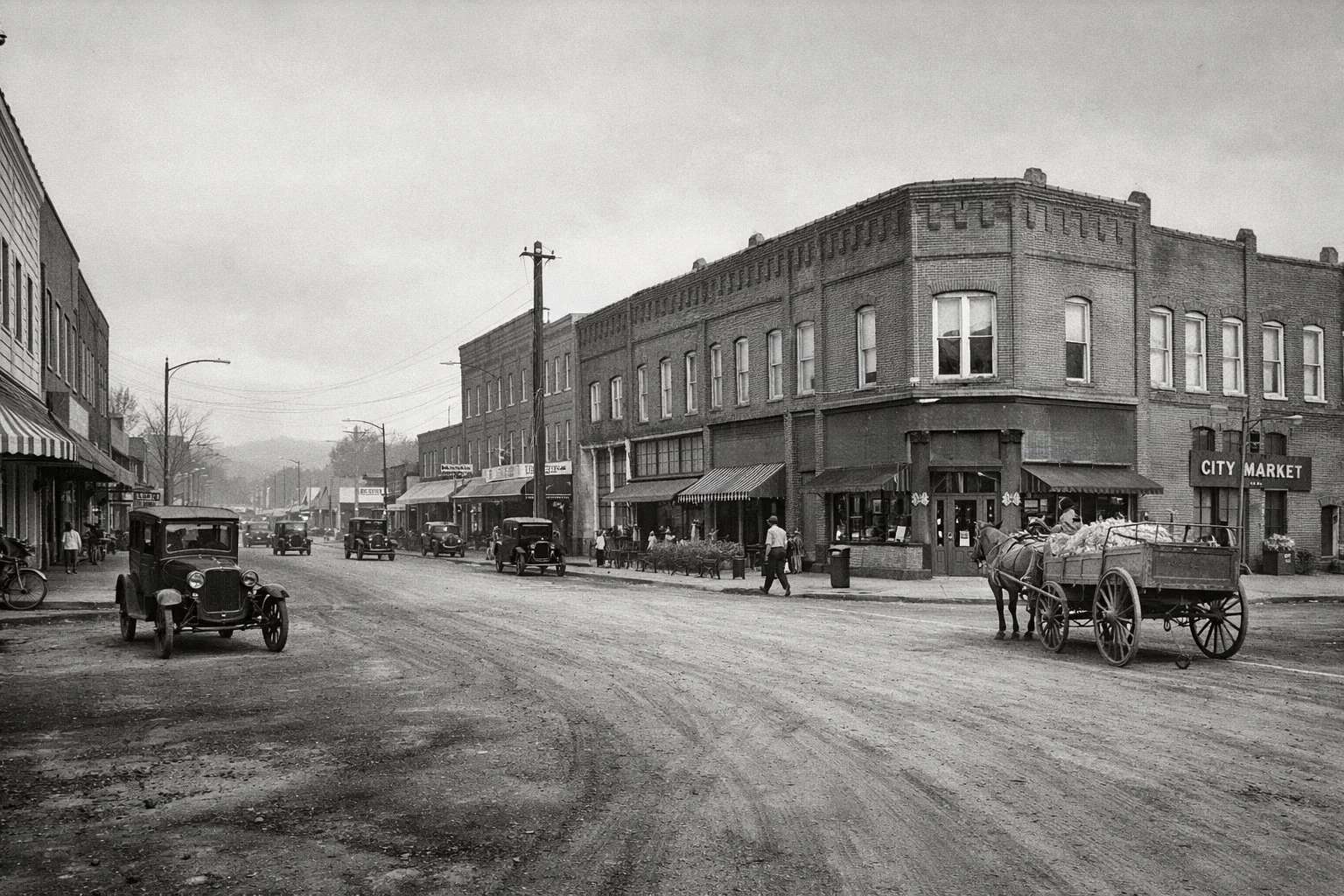
As I thought more deeply about my predicament, I realized an immense sense of guilt came with even considering the idea of exposing this phenomenon to anyone else. If I could look back and see how the past truly was, or what happened on a certain date and time, then history itself could be questioned. Worse than that, it might could even be altered. And if the past could be changed, then perhaps the future could also.
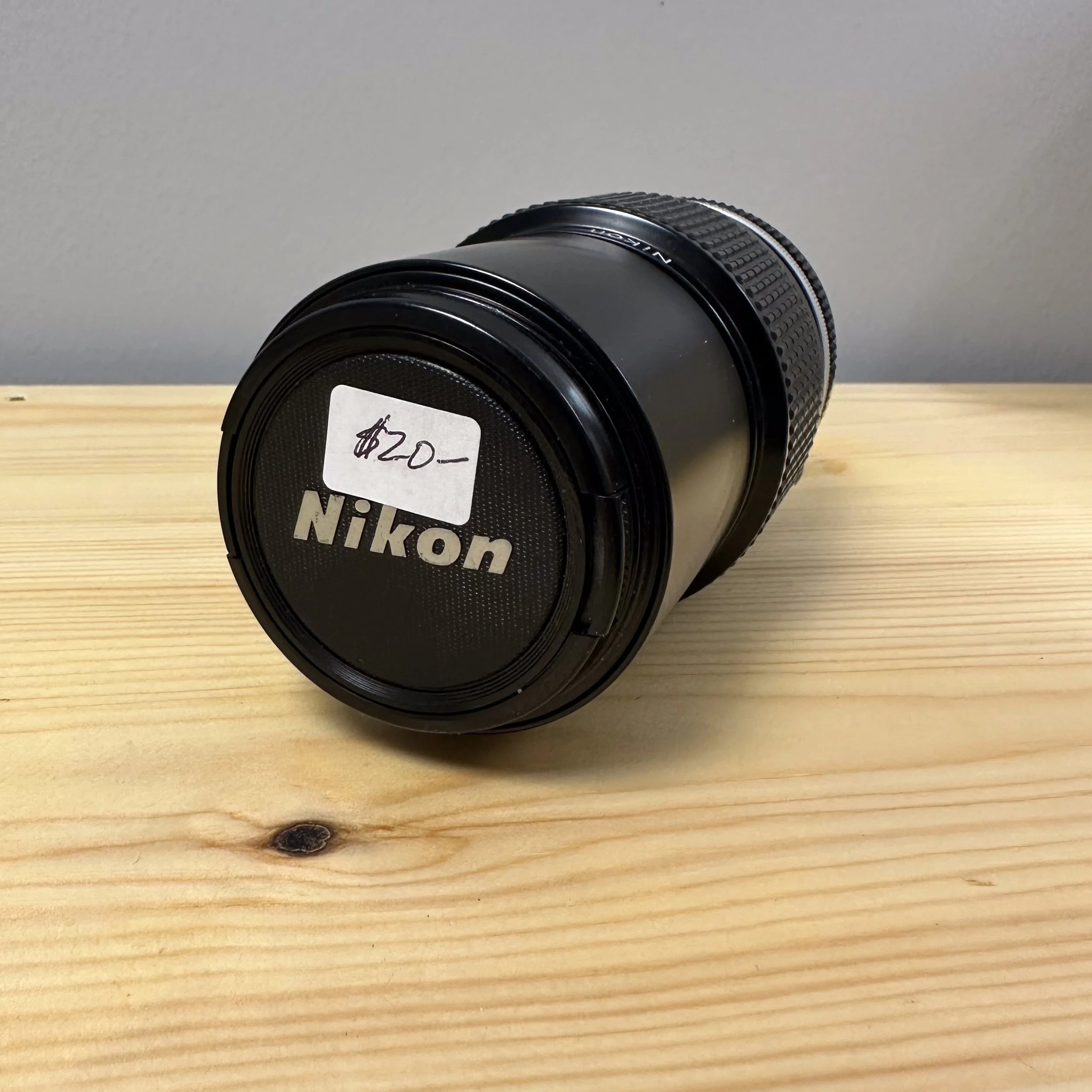
I wrestled with those thoughts for several nights. In the end, I decided to take the lens off the camera and place it on a shelf, where it would remain nothing more than a curiosity and a conversation piece. Once that decision was made, the lens came off quite easily. I left the original price tag on the lens cap, twenty dollars, as a reminder of how little it can cost to introduce an unnatural state of confusion into one’s life, and perhaps into the lives of others.
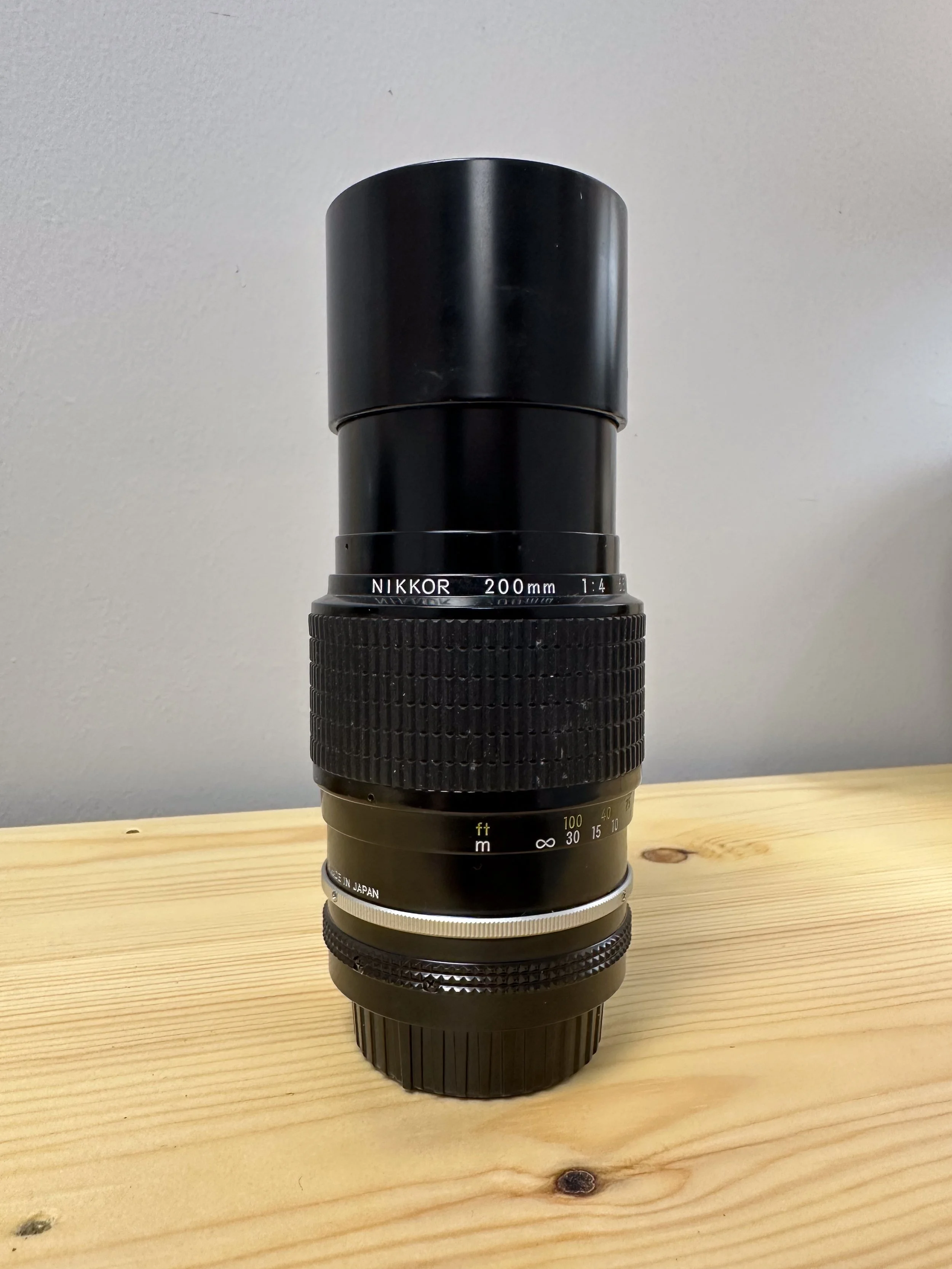
I felt content with my decision and resolved to tell no one. Some things, I believed, were not meant to be shared. As I looked at the lens resting quietly on the shelf, I couldn’t help but wonder how many other people might be out there, moving through ordinary days, quietly carrying ground-shattering secrets of their own.
***********************
Author’s Note:
I truly enjoy shopping at the Shop of St. Philips on Caldwell Street. The store is on my way home from town, which makes it an easy place to stop. It is always neat and clean, and the people who work there are consistently friendly and welcoming. Over the past year, I’ve put together an entirely new collection of long-sleeve shirts from the shop, all of them in excellent condition. Most appear to have been freshly washed and pressed, and some still have dry-cleaner tags attached.
The lens I purchased there turned out to be an exceptional find. I had no idea of its magical nature until I began using it. After that, I explored the idea further and felt compelled to write about the experience. It’s remarkable how a single vintage object can stir memories and invite us to think more deeply about the past.
For now, the lens rests quietly on a shelf, where it seems perfectly content. I’ve decided that a little mystery is best left alone, at least for the time being.
I hope you’ve enjoyed reading this story as much as I enjoyed writing it.