
Japandi Zen: The Art of Intentional Calm
The Vision
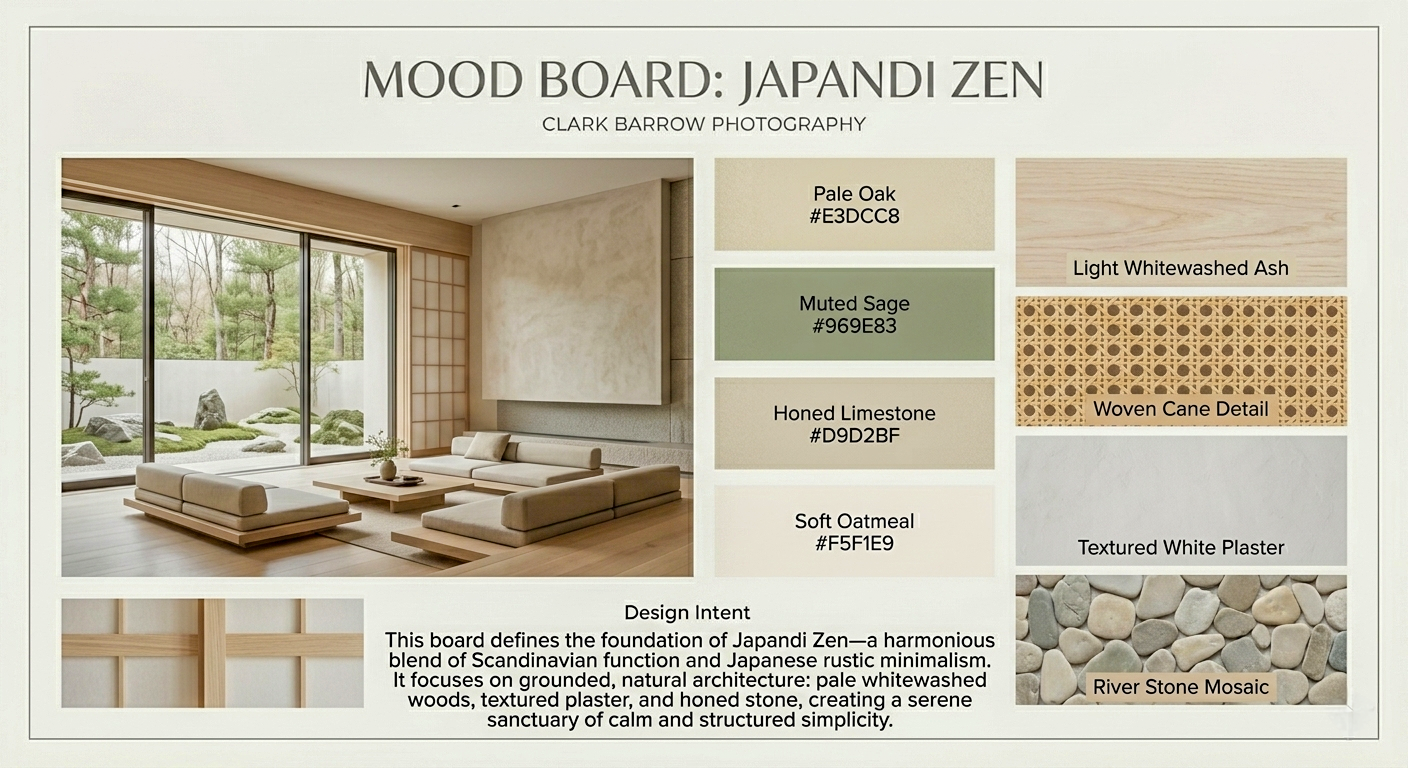
Japandi Zen is the harmonious intersection of two worlds: the functional efficiency of Scandinavian design and the rustic, meditative minimalism of traditional Japanese aesthetics. This reimagining style is built on the philosophy of Wabi-Sabi—finding beauty in imperfection and simplicity. It is an aesthetic designed to strip away the "noise" of modern living, transforming any space into a grounded, restorative sanctuary that prioritizes mental well-being and architectural clarity.
The Palette & Texture
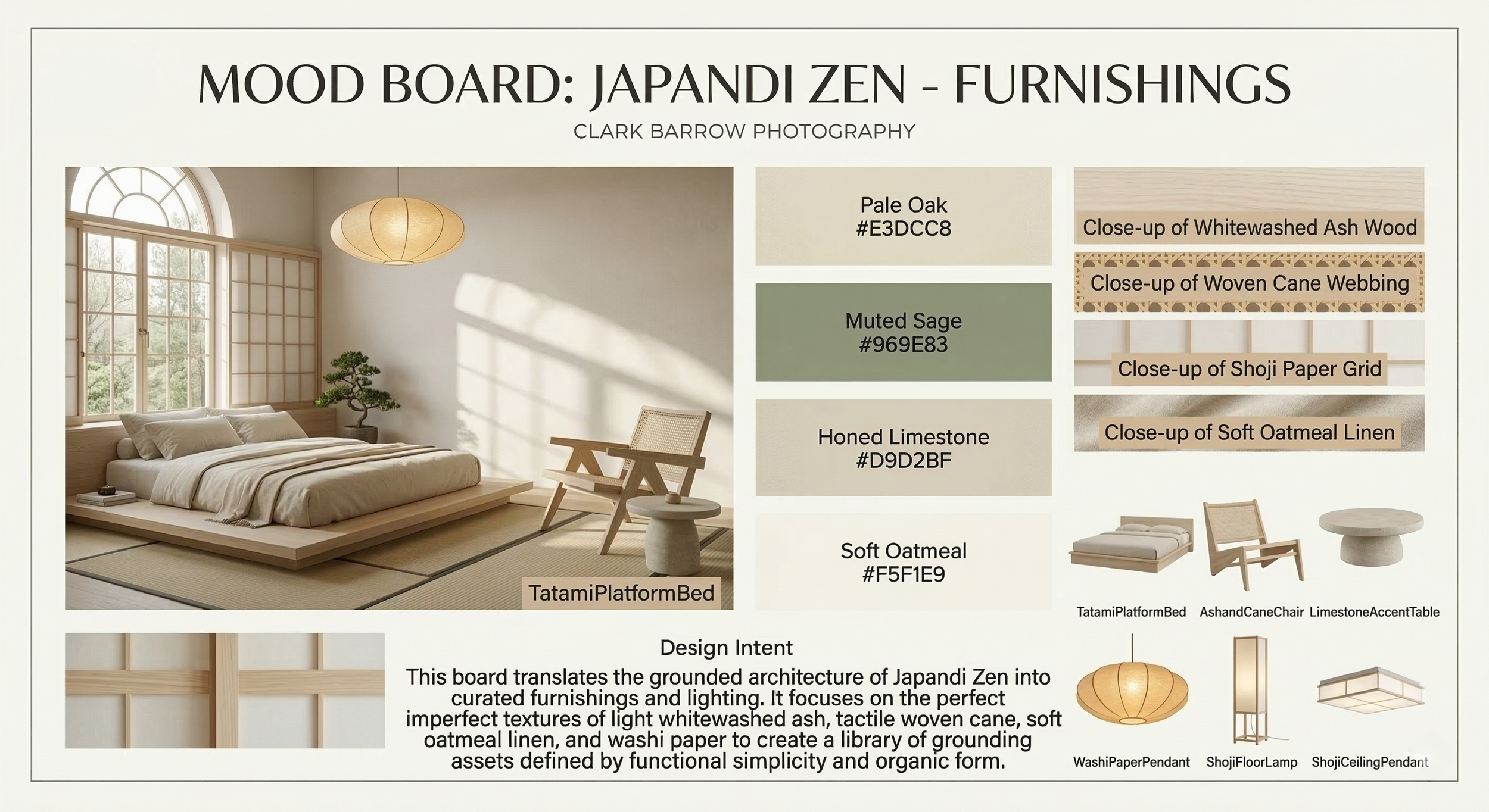
The soul of Japandi Zen lies in its "warm minimalism." We utilize a soft, earthy palette of pale oak, muted sage, and honed limestone to create a foundation that feels both expansive and protective. Texture is used with surgical precision: the smooth coolness of natural stone is balanced by the tactile warmth of light whitewashed ash, woven cane webbing, and soft oatmeal linens. Light is treated as a material itself, filtered through Washi paper and linear shoji-inspired structures to cast a soft, diffused glow.
The Result
The result is a "low-to-the-earth" living environment that radiates quiet confidence. By focusing on organic forms and high-quality natural materials, we create a space that doesn't just look beautiful—it feels profoundly still. It is the ultimate expression of modern luxury: the luxury of a quiet mind.
Japandi Zen: From Sterile to Serene Sanctuary
The Transformation
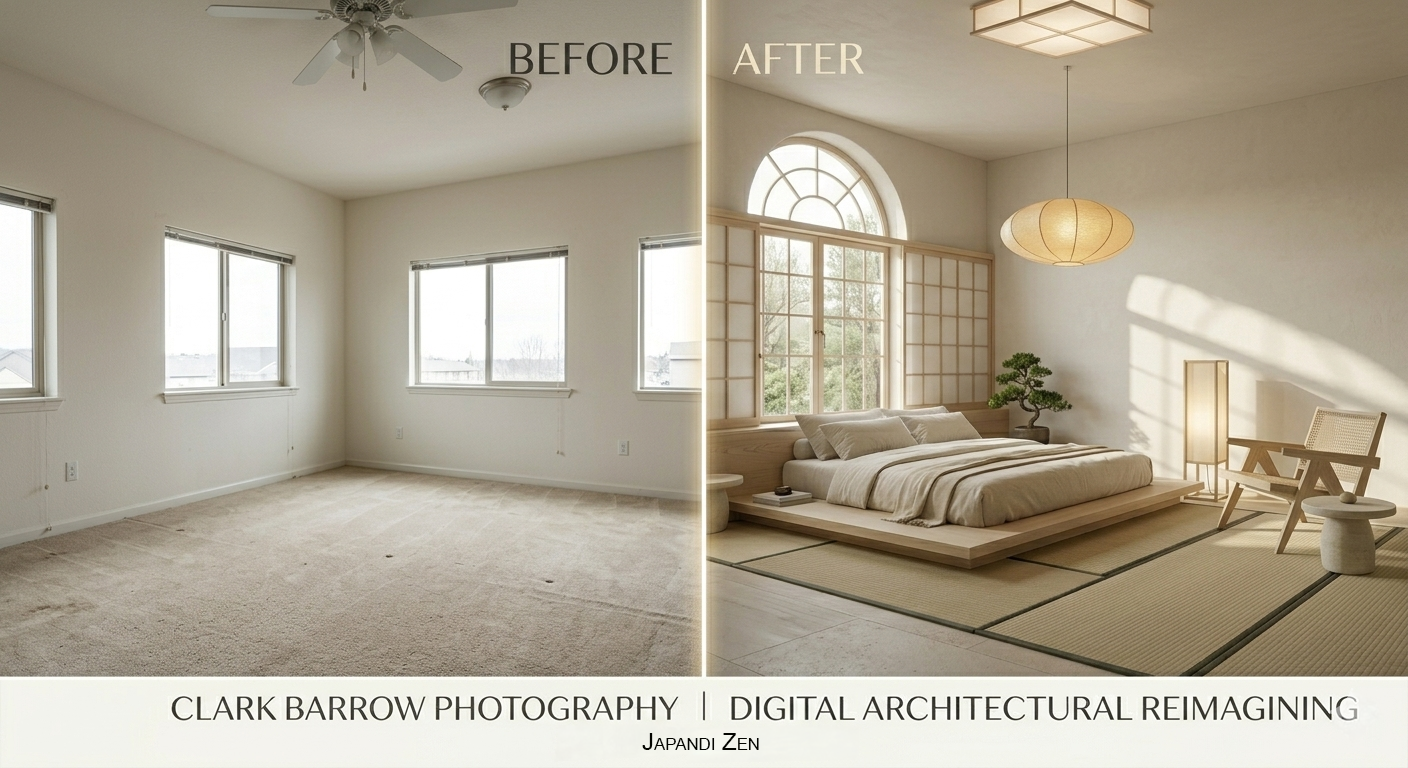
The "Before" image on the left represents the typical "blank canvas" of modern real estate: a sterile apartment living room with uninspired beige carpeting, flat white walls, and a dated acoustic "popcorn" ceiling. The standard rectangular windows and basic ceiling fan offer utility but lack any architectural soul or connection to the environment.
In the "After" reimagining, Clark Barrow Photography has executed a complete structural and aesthetic overhaul. We’ve replaced the carpet with a combination of Honed Limestone and traditional Tatami matting, creating a grounded, tactile foundation. The flat walls have been treated with a soft textured white plaster, and the generic windows have been replaced with a dramatic, custom arch-and-linear shoji grid that filters light with architectural intent.
Key Design Elements:
Architectural Shell: The introduction of the shoji-inspired window wall transforms the room's geometry, providing a sophisticated focal point that balances Japanese tradition with modern Scandinavian lines.
Grounded Furnishings: The space is anchored by a low-profile Tatami Platform Bed and an Ash and Cane Chair, emphasizing a "low-to-the-earth" living style that promotes calm.
Sculptural Lighting: A large, ethereal Washi Paper Pendant provides a soft, diffused glow from above, while a linear Shoji Floor Lamp adds vertical structure and warmth to the corner.
Material Harmony: The palette is a masterclass in "warm minimalism," utilizing the "perfectly imperfect" textures of light whitewashed ash, woven cane, and natural stone.
The Result
The final vision is a restorative environment that feels both expansive and protective. By removing the "noise" of the original room and replacing it with structured simplicity, we’ve created a premium sanctuary that speaks to the growing demand for wellness-focused interior design.